

 Čeština
  Deutsch
  Polski
Tiyo expands its services with a metallographic laboratory
Having its own laboratory facilities will allow the company to respond flexibly to customer requests. The tests focus on smaller electronic components.

In five years, Tiyo has become a leader in battery testing. It started with simple equipment, but now has six test containers and will commission another one in the spring.
Tiyo conducted its first battery cell tests in 2020. It started with a simple controlled source that can supply and consume energy at the same time.
"We first performed cycling and functional tests, for which a two-quadrant controlled source was sufficient. In the first tests, we were able to charge and discharge the battery in a controlled manner, calculate and evaluate key parameters such as capacity and internal resistance in different modes," recalls Jaromír Kejval, co-owner and technical director of Tiyo.
Testing gradually moved outside the production halls. The impetus was growing customer demand for testing uncontrolled battery reactions in extreme conditions. "Even if you take maximum safety precautions in the hall, the risks are too great," warns the technical director. A "battery town" began to emerge on the Tiyo premises, which made it possible to carry out more demanding tests.
The company purchased its first container for storing tested samples, followed by a six-meter-long reaction container with steel walls for risk testing. "Initially, it was a sturdy metal box with a fire extinguishing system and measuring equipment. Because we needed to conduct tests in winter and summer at room temperature, we insulated the container. Today, it is also possible to temper it," explains Jaromír Kejval.
A container with a pressure-tight chamber with a volume of almost 500 liters is designed for similar types of tests. It can handle internal overpressure of up to 40 bar, which allows the thermodynamics of the processes during the test to be measured. When the cells ignite, the composition, temperature, and pressure of the released gases are evaluated.
"Initially, we had this container in the hall. Even though we took strict safety measures, measurements showed that it would be better to move it to a more suitable environment. This led us to create another external container, one part of which is a production workplace with a closed pressure vessel, and the other is a separate service area with measuring equipment," says Tiyo's co-owner.

In recent years, the largest investments in battery testing have gone into infrastructure, measuring, and testing equipment. Tiyo currently has six containers. "A total of three are intended for storage, two of which are for batteries and one for contaminated suits and equipment," says Václav Zmítko, head of the battery testing team.
During testing, uncontrolled reactions cause batteries to smoke, burn, and explode. Even after testing is complete, hazardous substances remain inside them. "Technicians work in protective suits and breathing apparatus. Tools and all equipment are also contaminated with fumes and fine dust," explains the technical director, emphasizing the importance of the "dirty" container.
The battery town includes a decontamination chamber with a shower and changing room. In the spring, another reaction container will be added to the fleet. "The first container is no longer sufficient for our needs. The purchase of a new one will also allow us to shorten the time needed to prepare tests," says Jaromír Kejval. While the testing itself takes only a few minutes, the preparation can take several days.
The company has applied and further developed its many years of experience in testing components for the automotive industry in the field of battery testing. A team of five experts is in charge of this. Compared to component testing, there are many more risk tests for batteries, which examine their behavior outside of safe operating conditions.
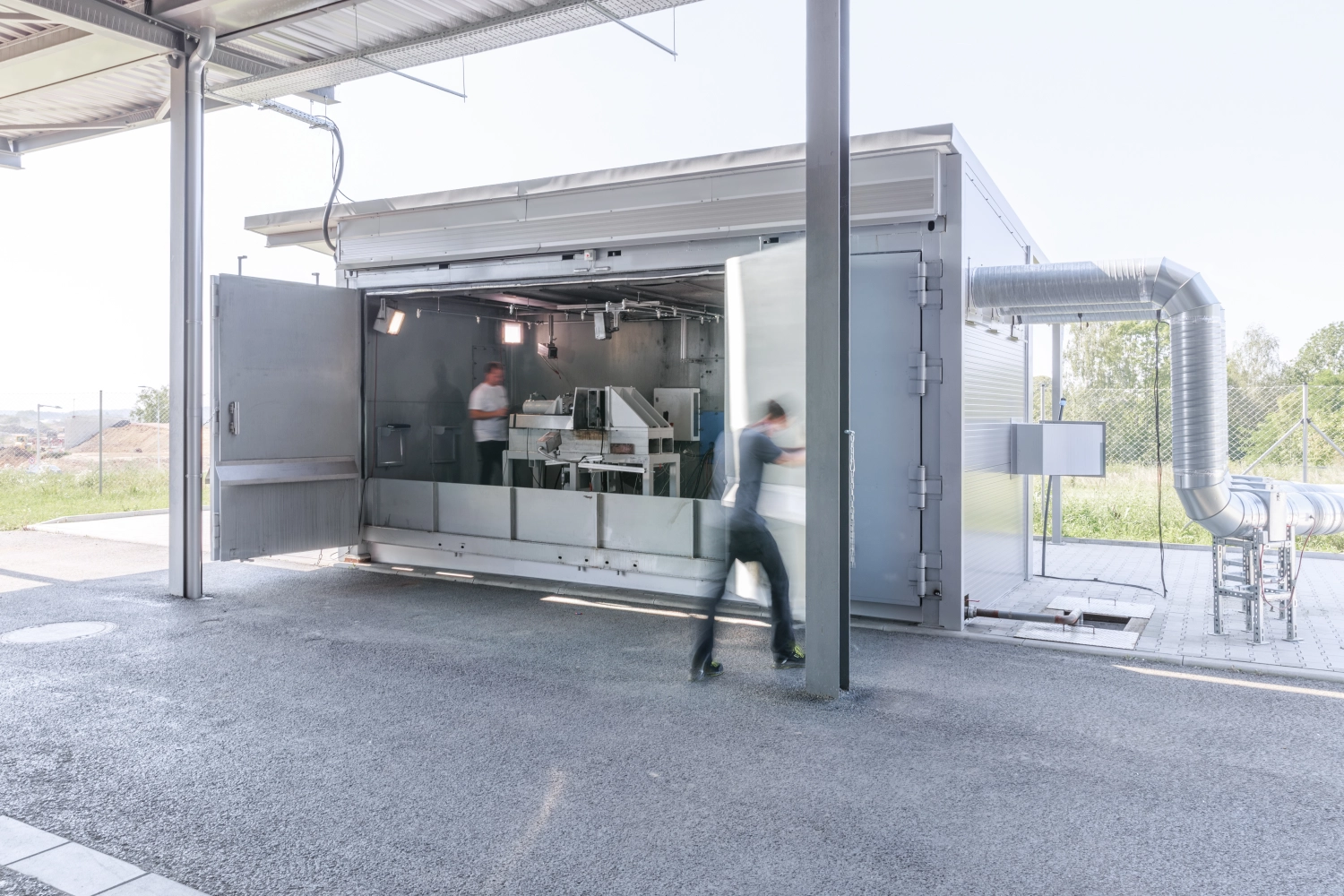
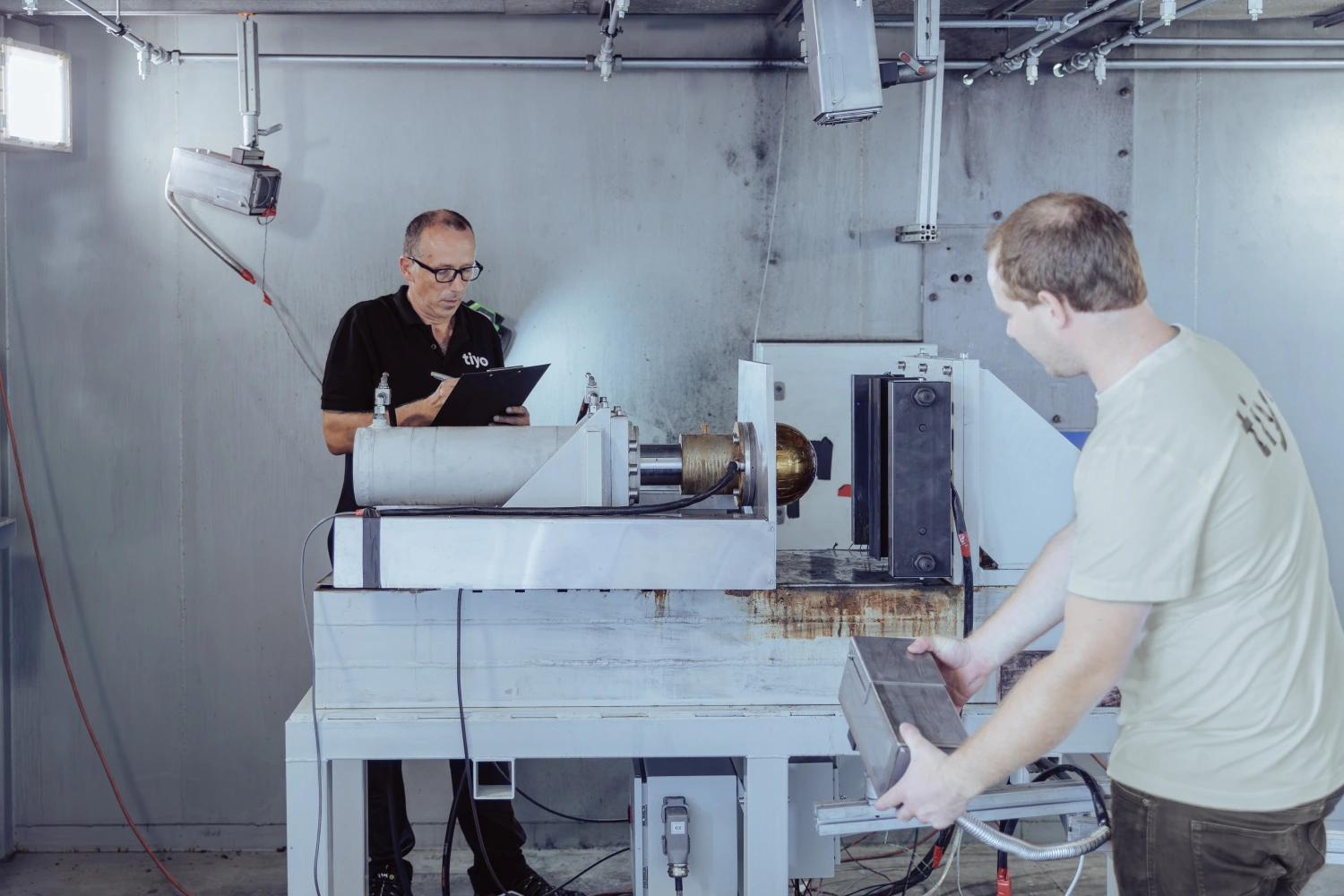

"We most often perform various types of stress tests, mostly mechanical damage and short-circuit tests, vibration tests, or we test resistance to water and dust ingress," describes Václav Zmítko.
Tiyo conducts dozens of battery cell and module tests every year. Some projects last a week, while more demanding ones, consisting of dozens of sub-tests, can take up to two years. "Long-term tests focus on cycling and functional properties. When we detect a gradual decrease in the usable capacity of the battery compared to its original state, it is not possible to speed up the process," notes Jaromír Kejval.
According to him, battery safety tests will remain the main task of testing in the coming years. "Even though the advent of electromobility is significantly slower than expected, batteries will remain in today's technologically advanced world. No matter what direction battery technology takes, tests verifying their safety in non-standard situations, such as extreme temperatures, overcharging, mechanical damage, and short circuits, will remain crucial for their safe use," concludes the co-owner of Tiyo.


